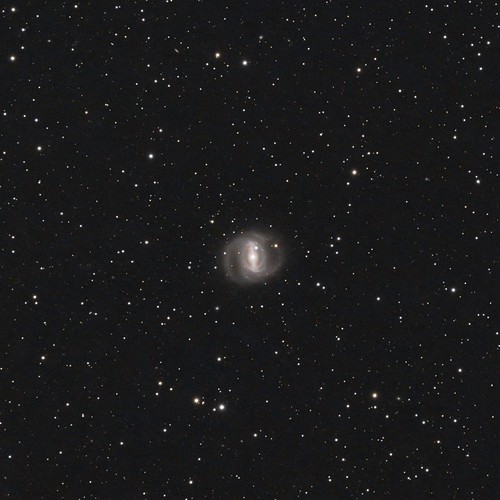
 A recent supernova became visible in galaxy NGC 1433.
I pointed my little 101mm telescope toward the galaxy hoping to catch some of the light.
The supernova showed up. This galaxy is 50 million light years away, which means the event occurred during the early cenozoic period, only about 16 million years after the dinosaurs went the way of the dinosaurs.
This was with 5 hours and 45 minutes of exposure with one shot colour at f5.4 in a TeleVue 101is telescope.
The supernova itself is the large bright blue/white star just to the top right of the central galactic core. The star is so bright it almost outshines the core of the galaxy. Next step is to photograph the galaxy again as the star fades.
Saturday, November 28, 2026
Supernova - SN 2026ahvu
A recent supernova became visible in galaxy NGC 1433.
I pointed my little 101mm telescope toward the galaxy hoping to catch some of the light.
The supernova showed up. This galaxy is 50 million light years away, which means the event occurred during the early cenozoic period, only about 16 million years after the dinosaurs went the way of the dinosaurs.
This was with 5 hours and 45 minutes of exposure with one shot colour at f5.4 in a TeleVue 101is telescope.
The supernova itself is the large bright blue/white star just to the top right of the central galactic core. The star is so bright it almost outshines the core of the galaxy. Next step is to photograph the galaxy again as the star fades.

Subscribe to:
Post Comments (Atom)

No comments:
Post a Comment